The craft of stopping the scroll.
Honest, original writing on hooks, retention, visual attention, and pre-publish testing — the things that actually decide whether a short video gets watched. No hacks, no fake neuroscience, no “go viral” promises.
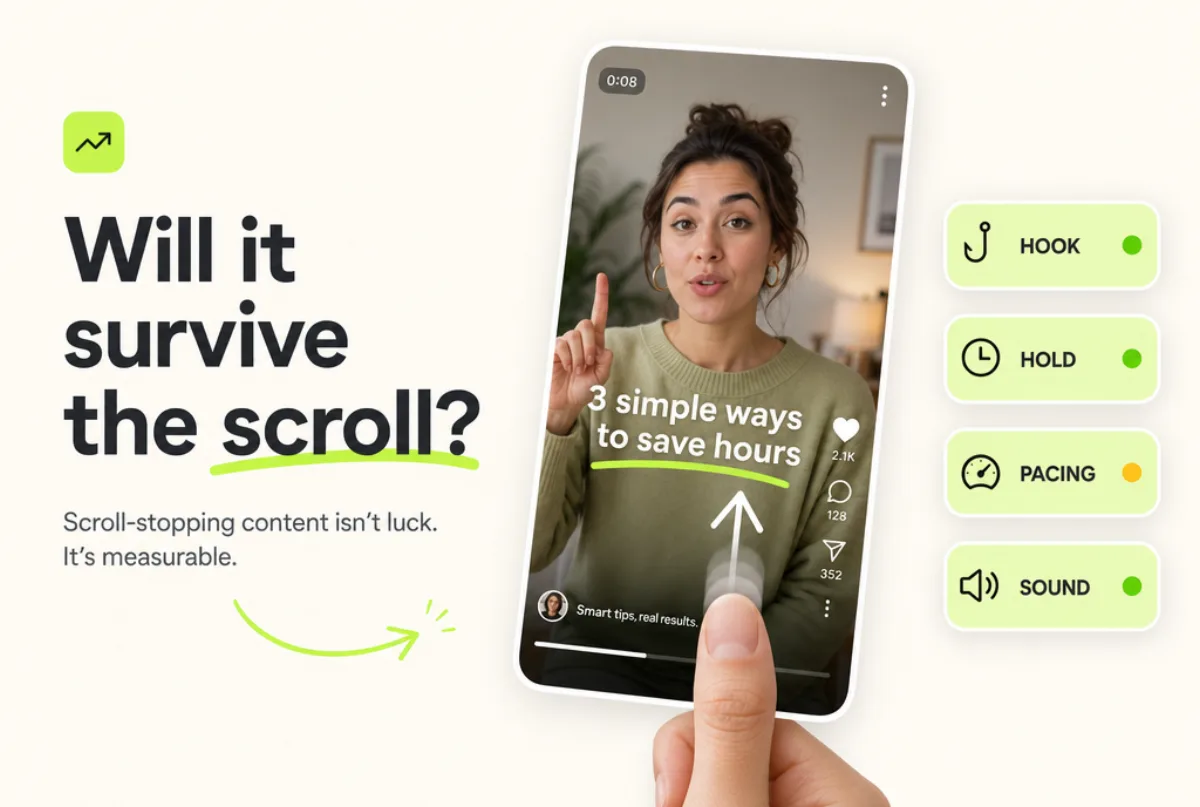
01Hooks
2 articles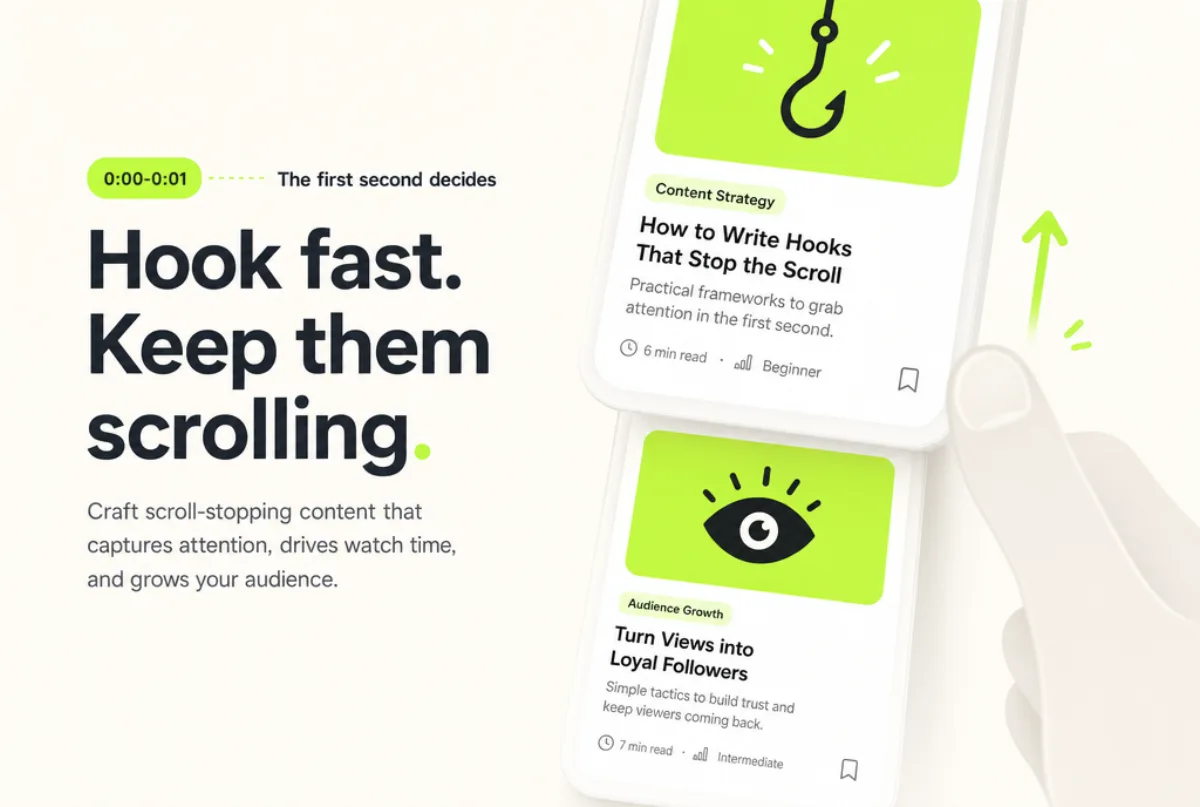 Hooks
HooksThe First Second Is the Whole Negotiation
The first second doesn't grab attention — it interrupts a departure already in progress. Here's how to win that moment.
 Hooks
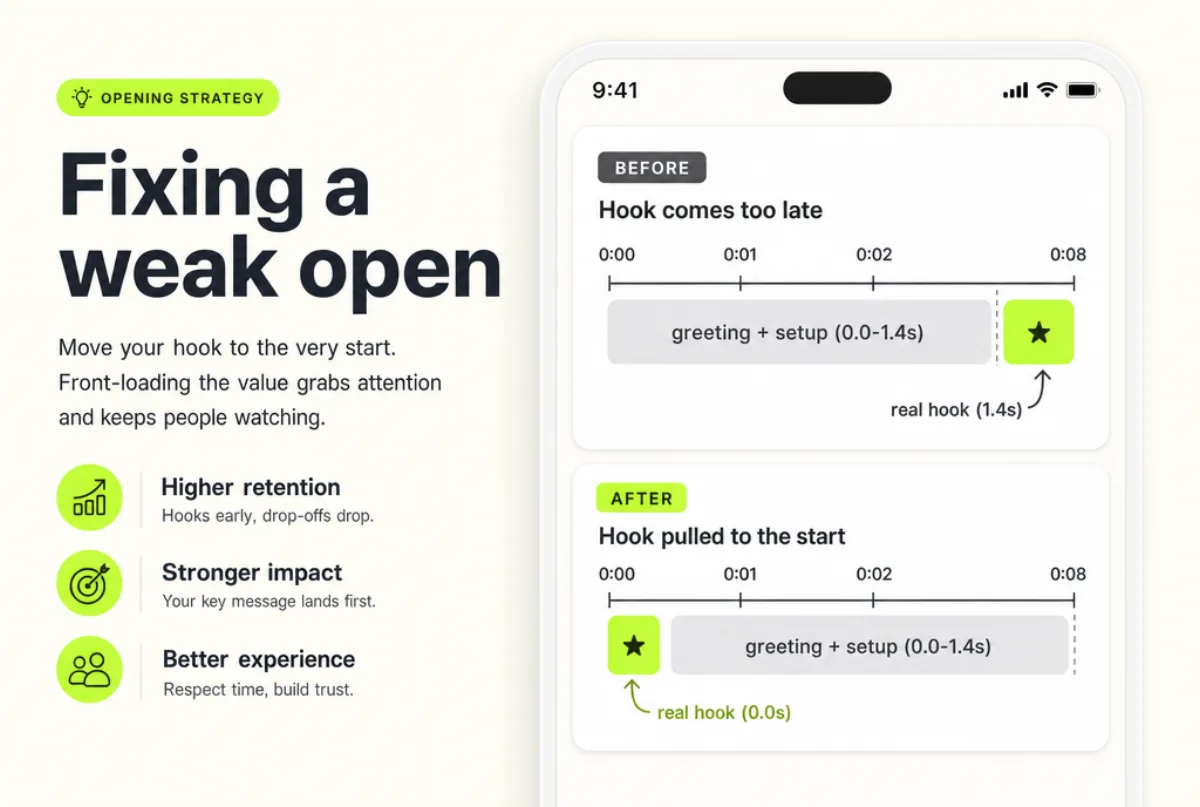
HooksFixing a Weak Open: A Field Repair Guide
Your open reads weak. Here's the ranked repair playbook — the fixes that move a hook most, and the one that fixes more weak opens than the rest.
02Retention
3 articles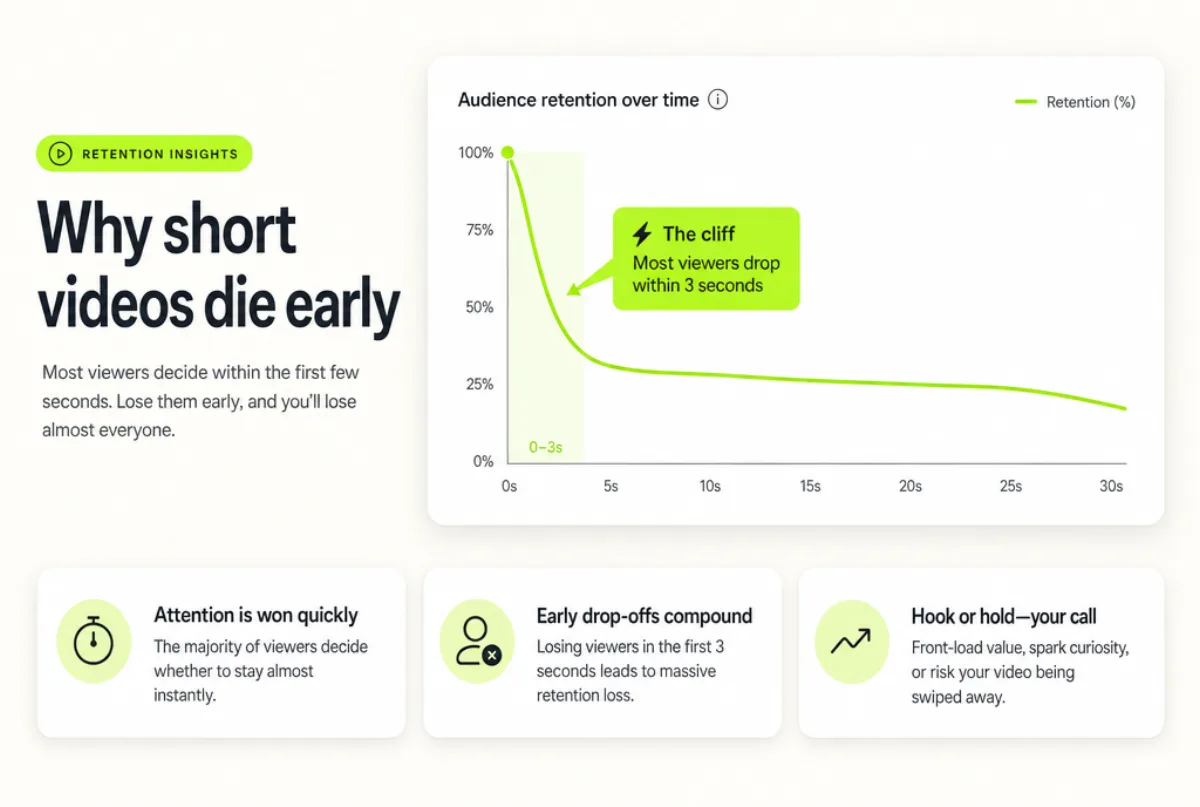 Retention
Why Most Short Videos Die Before Three Seconds
Short videos lose most of their audience in the first 3 seconds. Here's which exits are unavoidable noise — and which ones you can fix before you post.
 Retention
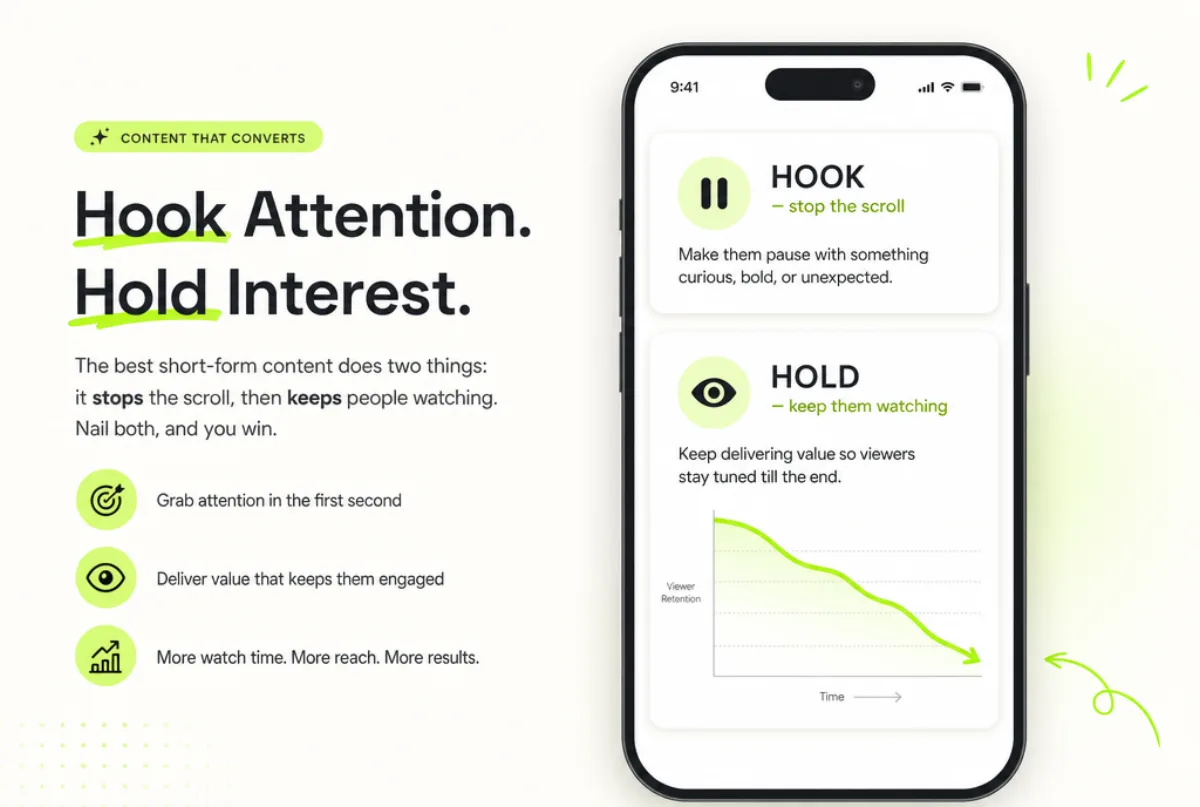
Hook vs. Hold: Two Different Jobs, Two Different Fixes
Stopping the scroll and keeping attention fail for different reasons. Learn which one is broken — and why one fix never fixes the other.
 Retention
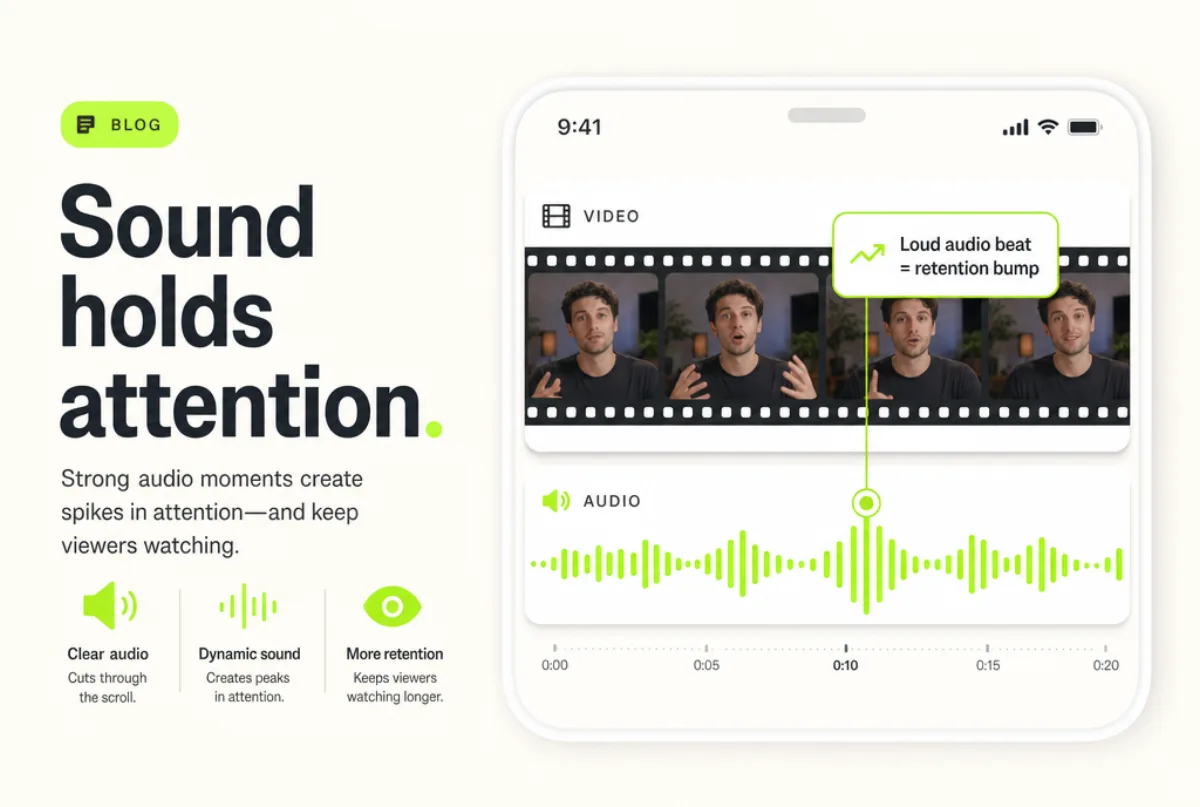
Sound Is Half the Video (and the Half You’re Probably Ignoring)
Sound does half the work of holding attention in short-form — and it’s the half most creators skip. Here’s how audio drives retention, with cheap fixes.
03Measurement
1 article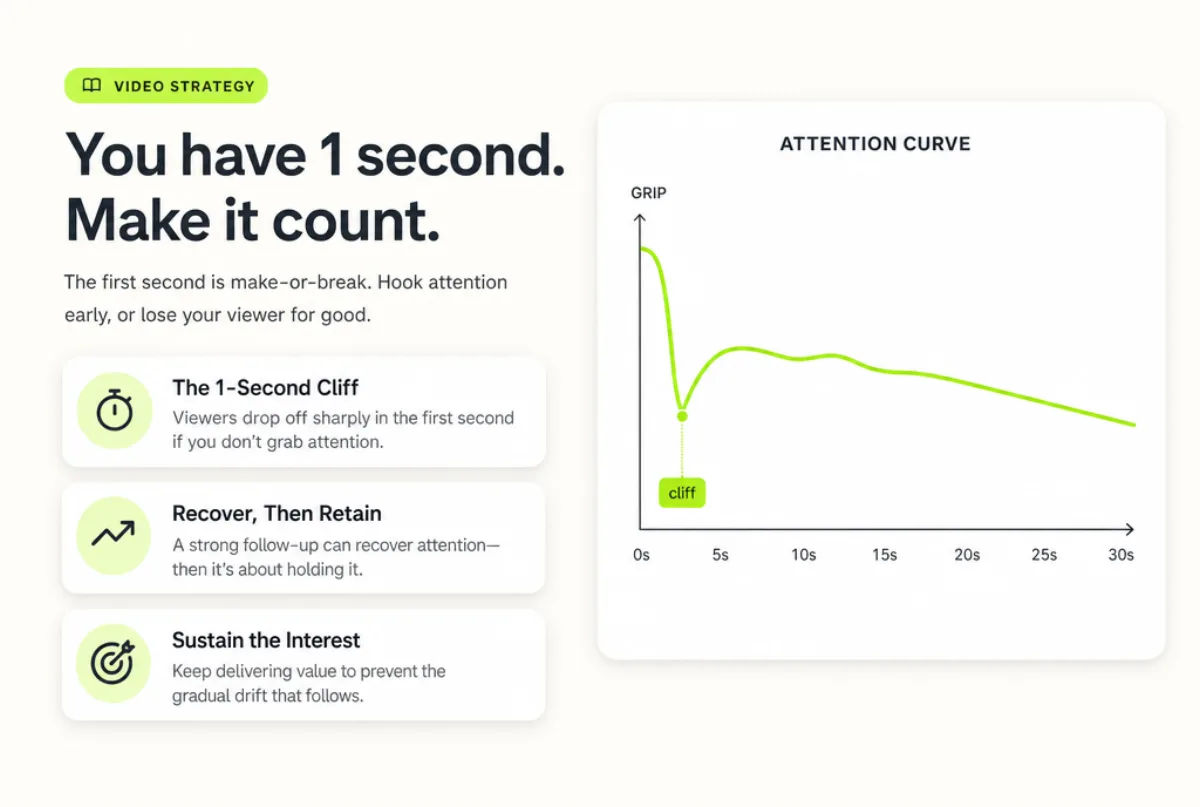
04Platforms
1 article
05Workflow
1 article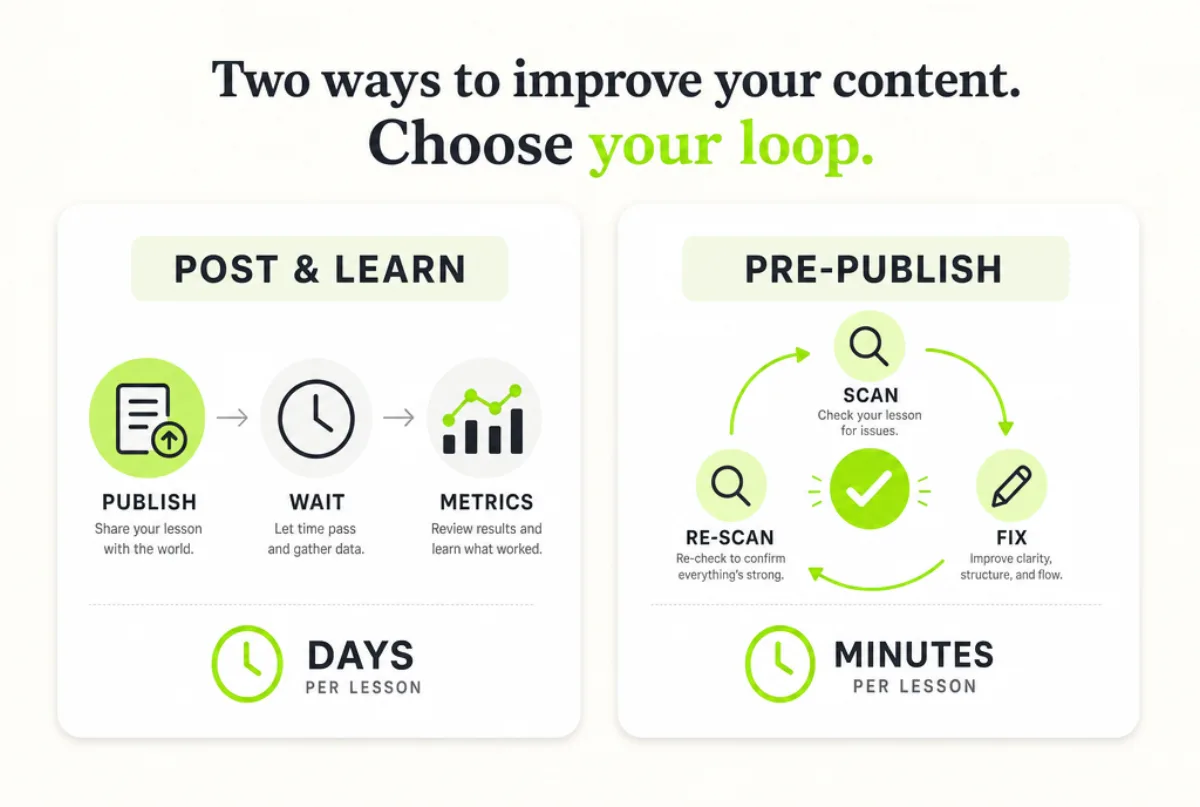
06Fundamentals
4 articles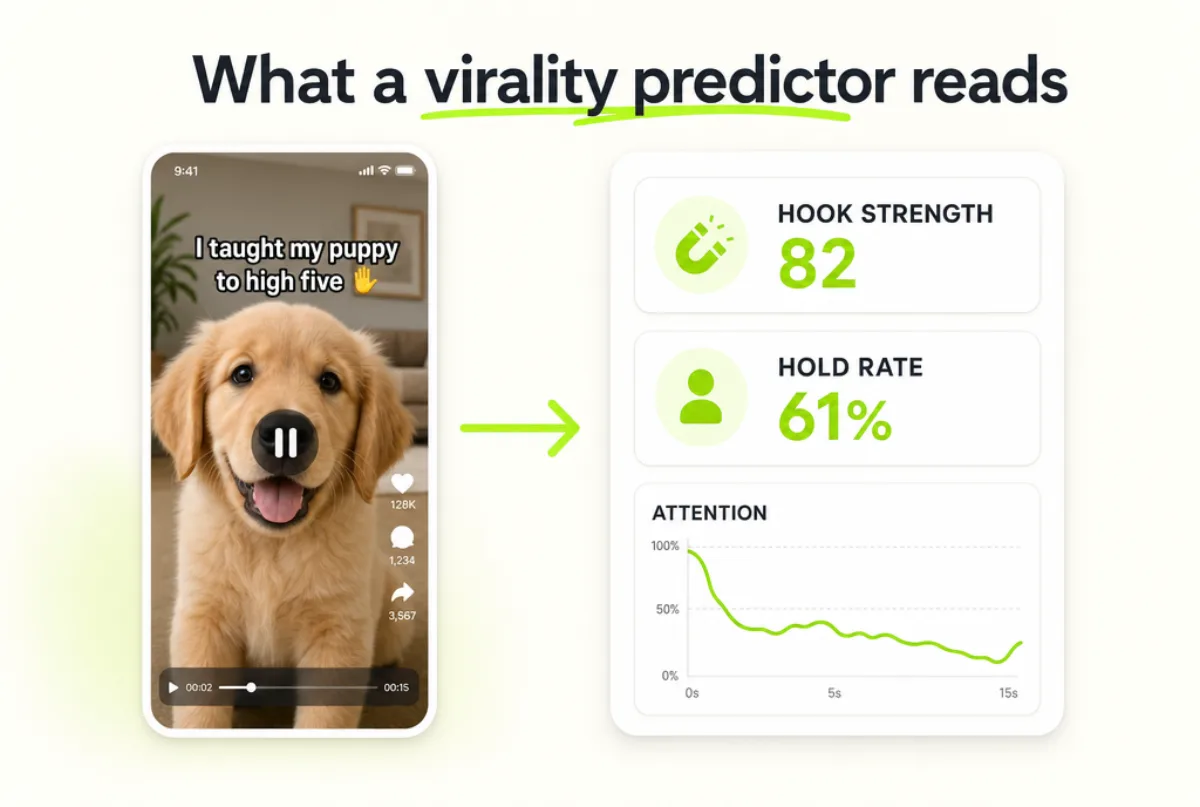 Fundamentals
What Is a Virality Predictor (and What It Can’t Do)
An honest virality predictor reads your video's creative structure before you post — so you fix the weak second instead of guessing.
 Fundamentals
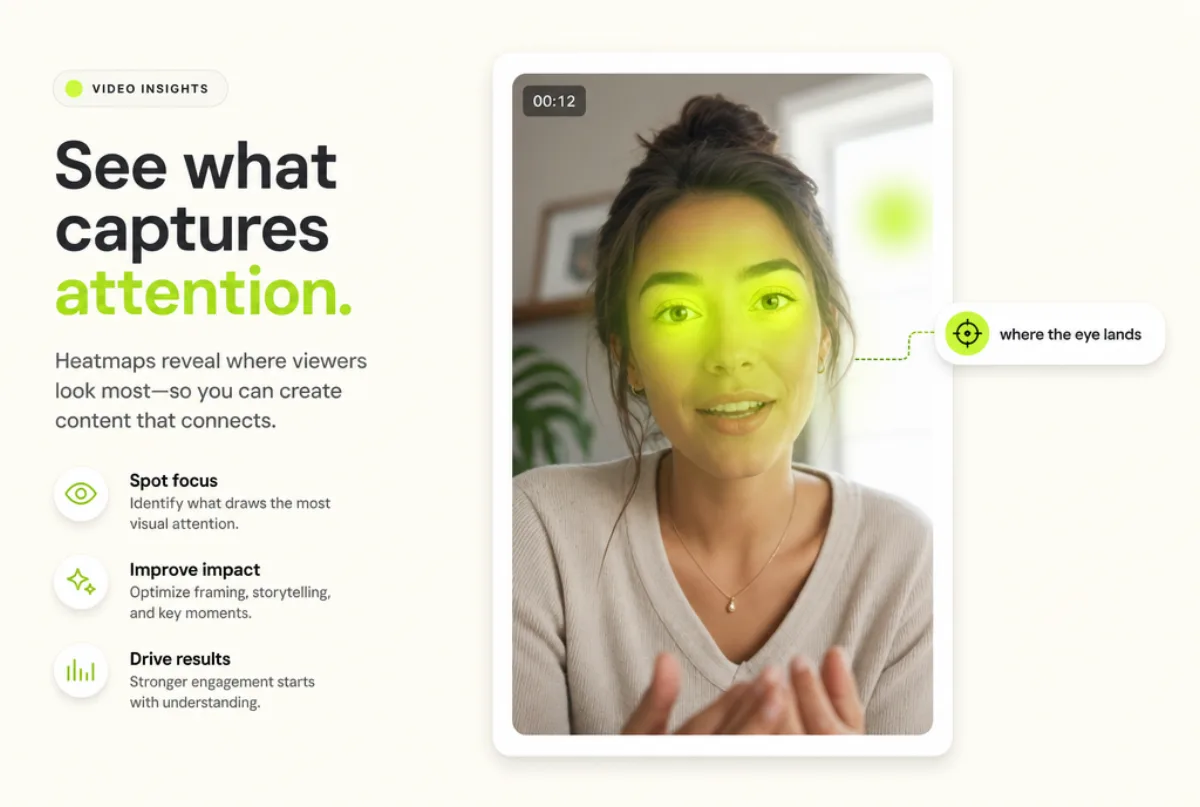
How the Eye Decides Where to Look (Before You Do)
Visual saliency is the eye's automatic pull toward motion, contrast, and faces. Learn to read it and steer gaze in every frame.
 Fundamentals
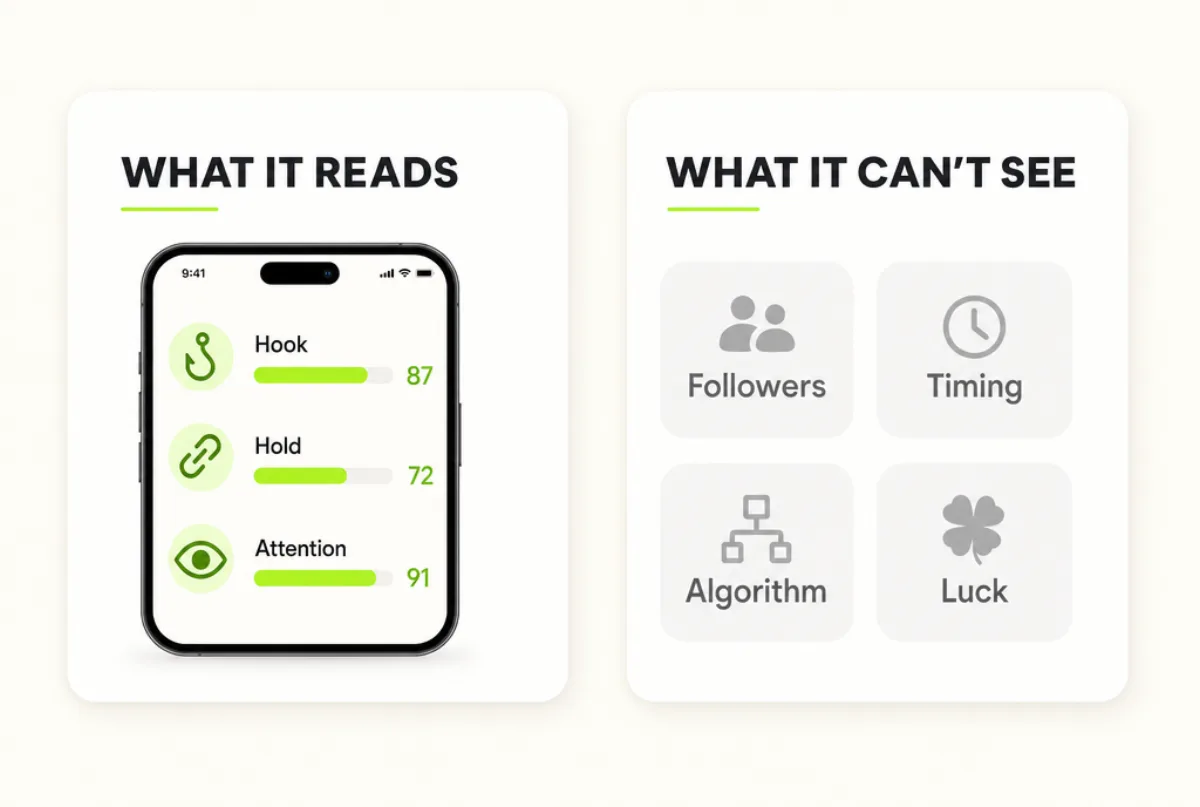
What a Virality Score Can — and Can’t — Tell You
A virality score is a useful instrument and a terrible oracle. Here's what it reads, what it can't, and how to use it honestly.
 Fundamentals
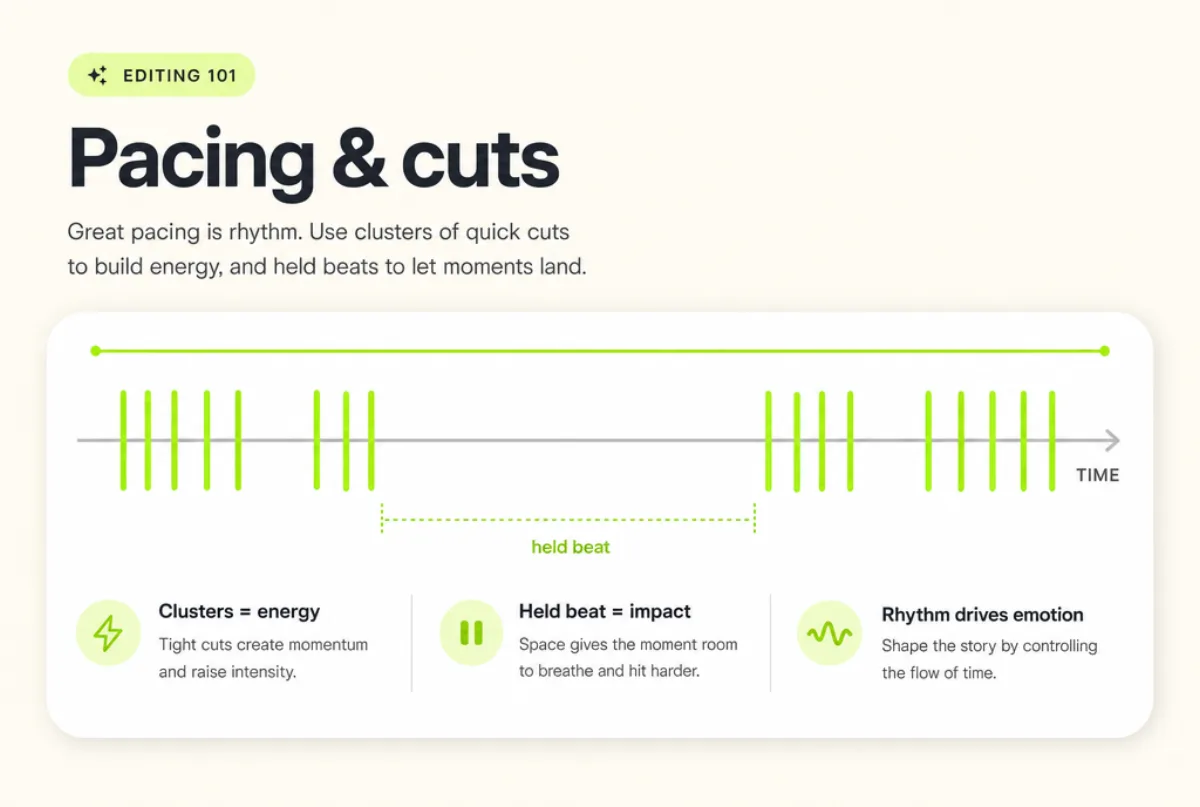
Pacing and Cuts: The Hidden Engine of Watch Time
Every cut resets attention. How pacing holds short-form viewers — why faster isn't always better, and how to find your dead beats.
Stop guessing. Scan the clip.
Drop a short video and get Hook Strength, Hold Rate, a second-by-second attention curve, and a real attention heatmap — in about a minute. First scans are free.