Sound Is Half the Video (and the Half You’re Probably Ignoring)
Sound does half the work of holding attention in short-form — and it’s the half most creators skip. Here’s how audio drives retention, with cheap fixes.
Ask a creator what they'd fix about their last video and they'll mention the shot, the lighting, the edit.
Almost nobody says "the sound." That's the mistake.
TL;DR — Sound does about half the work of holding attention, and because creators ignore it, it's where the cheapest retention wins hide.
🔊 Why sound punches above its weight
You can look away from a screen. You can't easily not hear.
On a short-form feed: sound on by default, phone close to the face, earbuds funneling the whole mix into someone's head.
In that setup, audio isn't a backing track. It's a second channel of attention running in parallel with the picture — and it fails, or saves you, on its own.
👁️ You can't look away from sound
The eye is a spotlight: it points at one thing and can swing off your video in an instant.
The ear is a floodlight — omnidirectional, always on, always sampling.
That asymmetry is why audio earns its keep:
- A viewer who glanced at a notification is still hearing you.
- If the sound goes flat at that moment, nothing pulls them back. The glance becomes an exit.
- If the sound does something — a beat lands, the voice sharpens — the ear flags it and attention swings back.
Audio is the channel still working after the eye has checked out.
🎯 The audio hook is real, and it lands first
There's a visual hook. There's also an audio hook — and it often arrives before the eye resolves the frame.
A sharp onset in the first fraction of a second is its own interrupt.
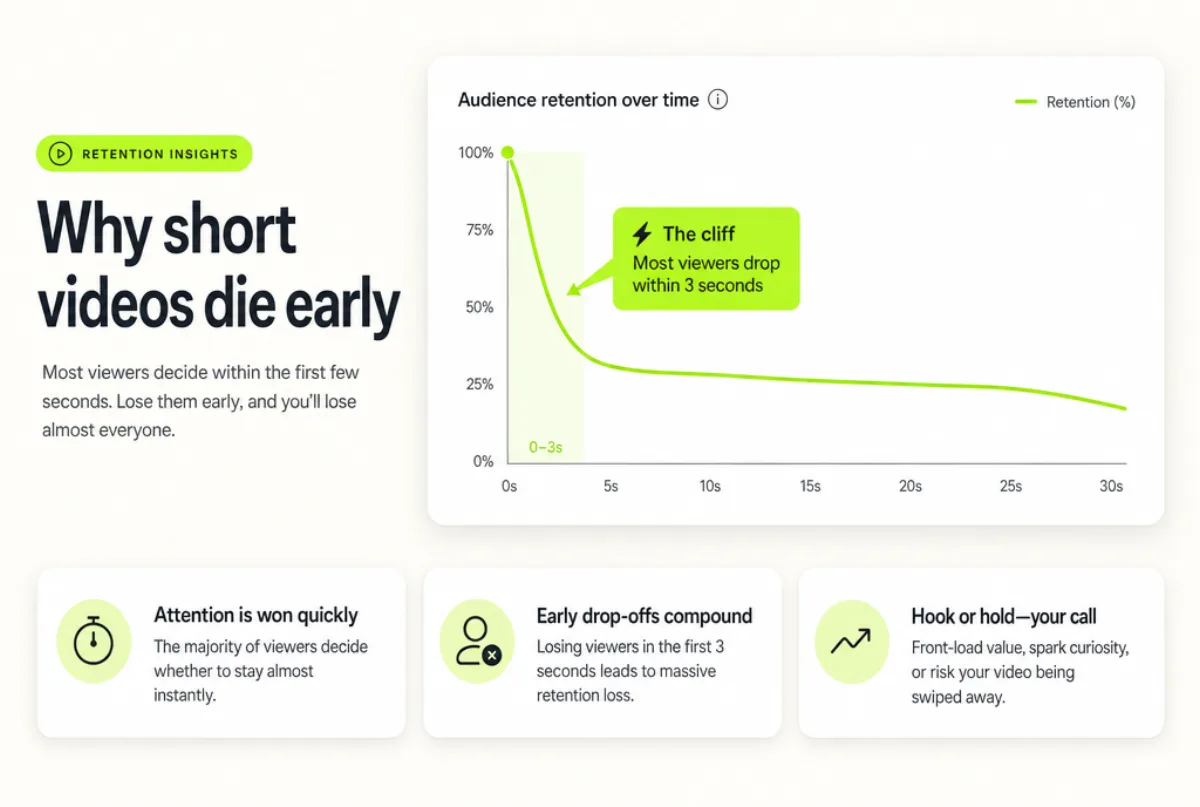
As we argue in the first second is the whole negotiation, the open is an interrupt, not an invitation.
Audio gives you a second tool to do that interrupting, and it's free.
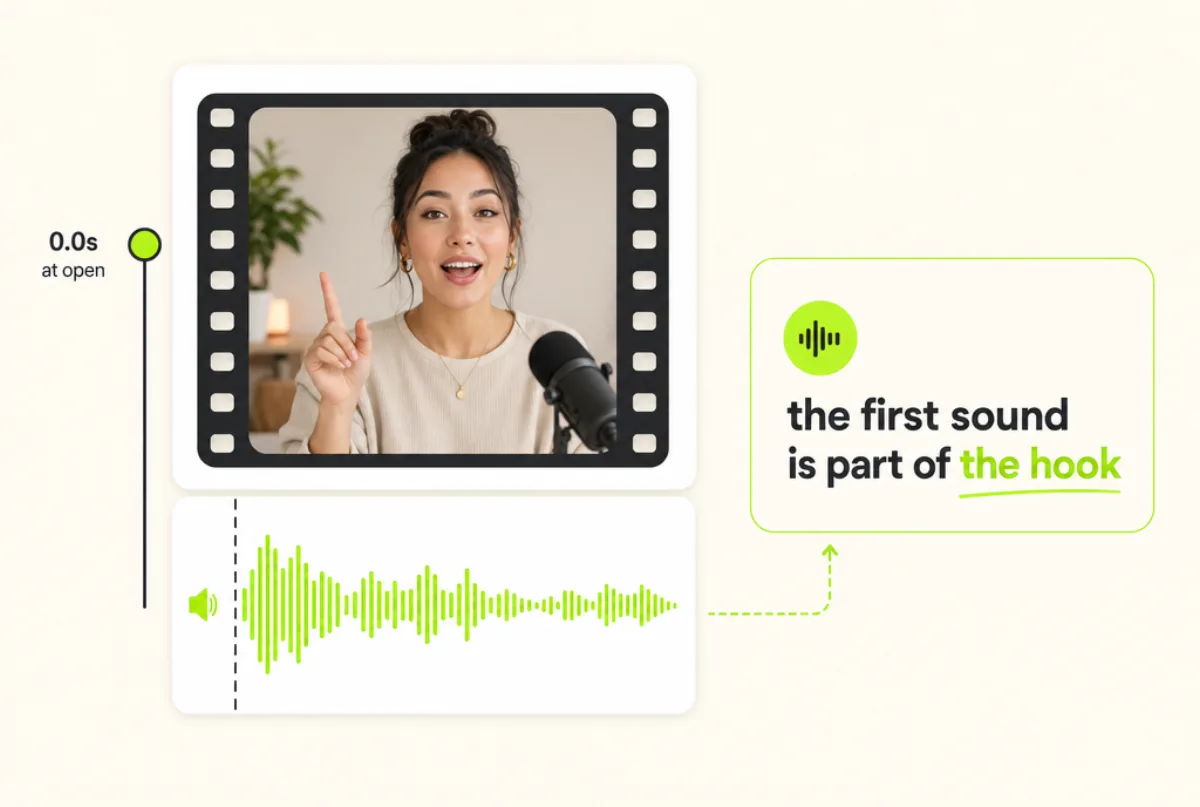 An audio onset in the first frames is a second hook — the ear orients before the spoken line even finishes.
The sequencing matters:
- The visual and audio onset do the interrupting in the first few frames.
- The spoken first line does the convincing a beat later.
A clever opening line that hasn't finished by the thumb-stop decision has spent your most valuable moment too late.
Silence at the open throws away one of your two hooks — a quiet reason short videos die before three seconds.
⏱️ How sound holds the middle
Past the open, audio works on retention in four distinct ways.
They're worth separating, because they fail separately — and the fix for one won't touch the others.
| Audio role | What it does | What failure sounds like | Quick fix |
|---|---|---|---|
| Energy floor | Baseline liveliness so the video never feels dead | Dead air, long flat silences | Music bed under the whole clip |
| Rhythm | A pulse to cut against, a beat to ride | Cuts fighting the music, no groove | Cut on the beat |
| Emphasis | Marks the moments that matter | Everything at one level, nothing pops | Add a swell, hit, or drop |
| Clarity | Speech effortless to follow | Muddy voice, music too loud | Voice clearly above the bed |
The most common failure isn't dramatic — it's flatness. A stretch with no music and a voice in a quiet room sags, and a low-energy stretch is where attention drifts.
Rhythm is where audio and editing become one problem: pacing and cuts supply the visual rhythm, the music bed supplies the audible one.
A video feels tight when those two rhythms agree.
💡 The energy floor and the deliberate drop
Here's the subtle idea that separates real sound design from "just add music."
A silence can be your most powerful emphasis tool — a drop to quiet right before a reveal makes the viewer lean in. But a silence only lands if there was sound to remove.
- Drop to quiet from an already-quiet video → nothing happens, just more flatness.
- Drop to quiet from a humming energy floor → the room holds its breath.
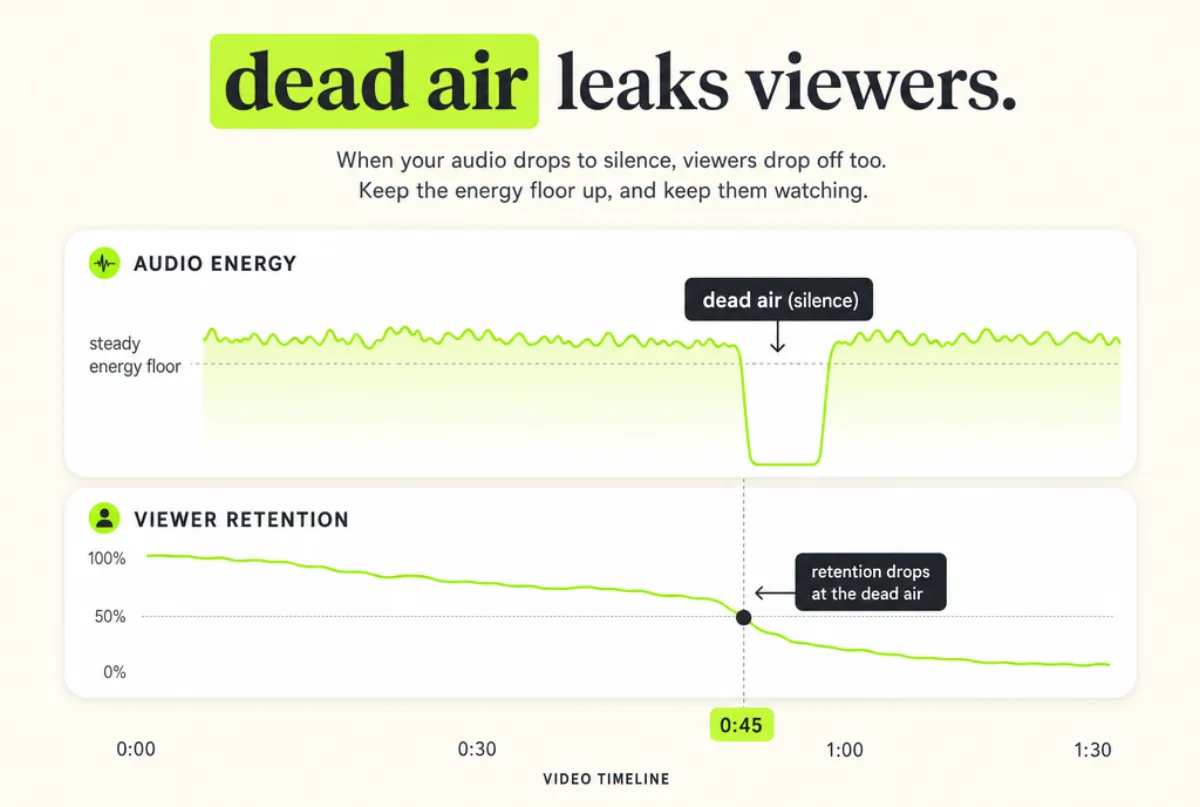 A held quiet beat reads as emphasis only when it drops from a steady energy floor — contrast needs a baseline.
So the energy floor isn't the opposite of a dramatic quiet beat — it's what makes the quiet beat possible.
Creators who think they need "a more dramatic moment" often have a floor problem instead: there was never enough steady energy for the moment to stand against.
✅ The cheap fixes most people skip
Audio is forgiving in a way camera work isn't. Small fixes, outsized effects, most cost nothing but attention.
- Put an audio event in the first half-second. Don't open into silence.
- Lay an energy floor. A music bed kills the dead-air sag. Keep it under the voice.
- Cut to the beat. Align edit points with the music so your cuts and audio stop fighting.
- Mind the levels. Voice above the bed; emphasis above the voice. One flat level = nothing lands.
- Use a held silence on purpose. A deliberate drop works because the floor was there to drop from.
- Check it on phone speakers and earbuds. A headphone mix can turn to mud on a tinny speaker. Most of your audience is on one or the other.
None of these need new footage, a better camera, or more talent — just a layer you already have.
📈 When a flat curve is really an audio problem
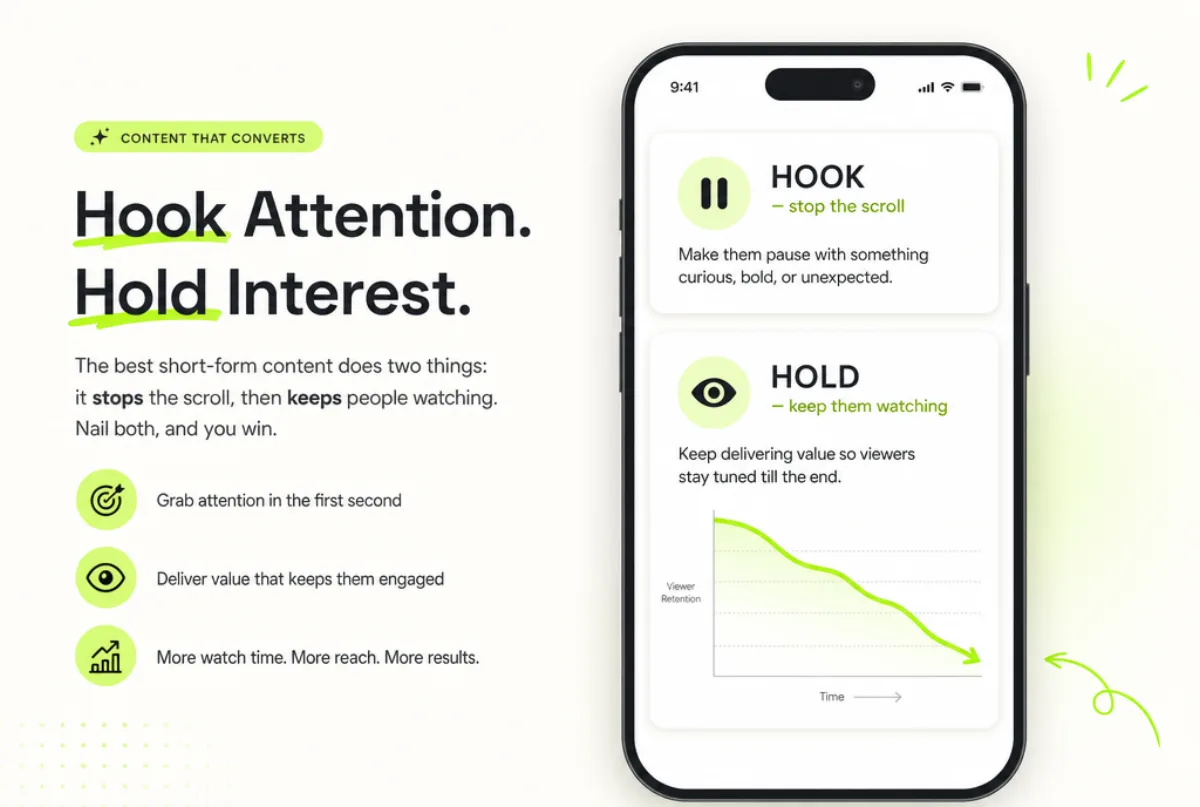
Here's the trap. When an attention curve sags in the middle, the instinct is to blame the picture.
Sometimes that's right. But a flat stretch very often turns out to be an audio problem wearing a visual disguise.
The two failures look identical and need opposite fixes:
- Visual dead spot → wants a cut or a new shot.
- Audio dead spot → wants a bed, a level bump, or an emphasis hit. The footage stays.
When the curve dips but the frame at that timestamp looks perfectly watchable, suspect the sound first. It's the failure people least expect and most easily fix.
Re-shoot every middle-of-video sag and you'll burn effort on clips that only needed a backing track.
Same logic as hook versus hold: diagnose what's actually failing before you reach for a fix.
🧠 How the read sees sound
When Scrollproof analyzes a clip, audio is a first-class channel.
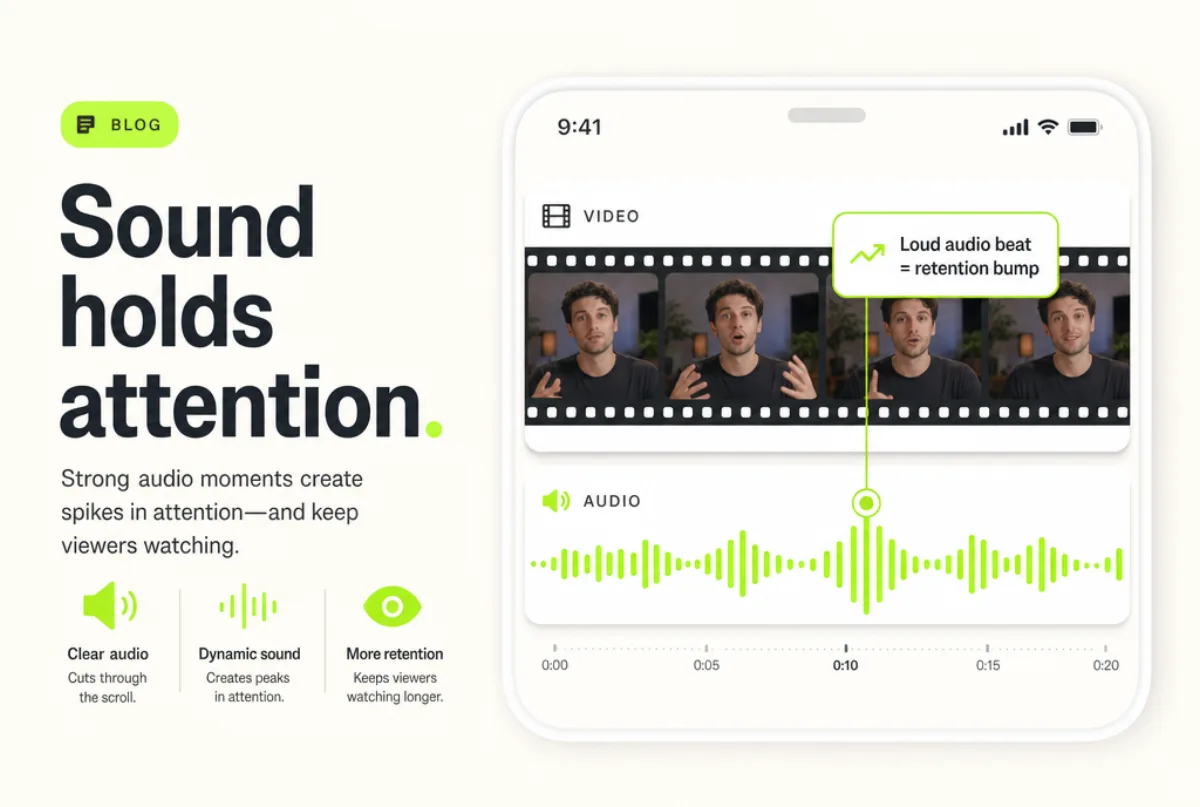
The engine reads loudness, onsets, spectral change, and silence second by second — the raw material of energy, rhythm, and emphasis.
That signal feeds two things the read reports:
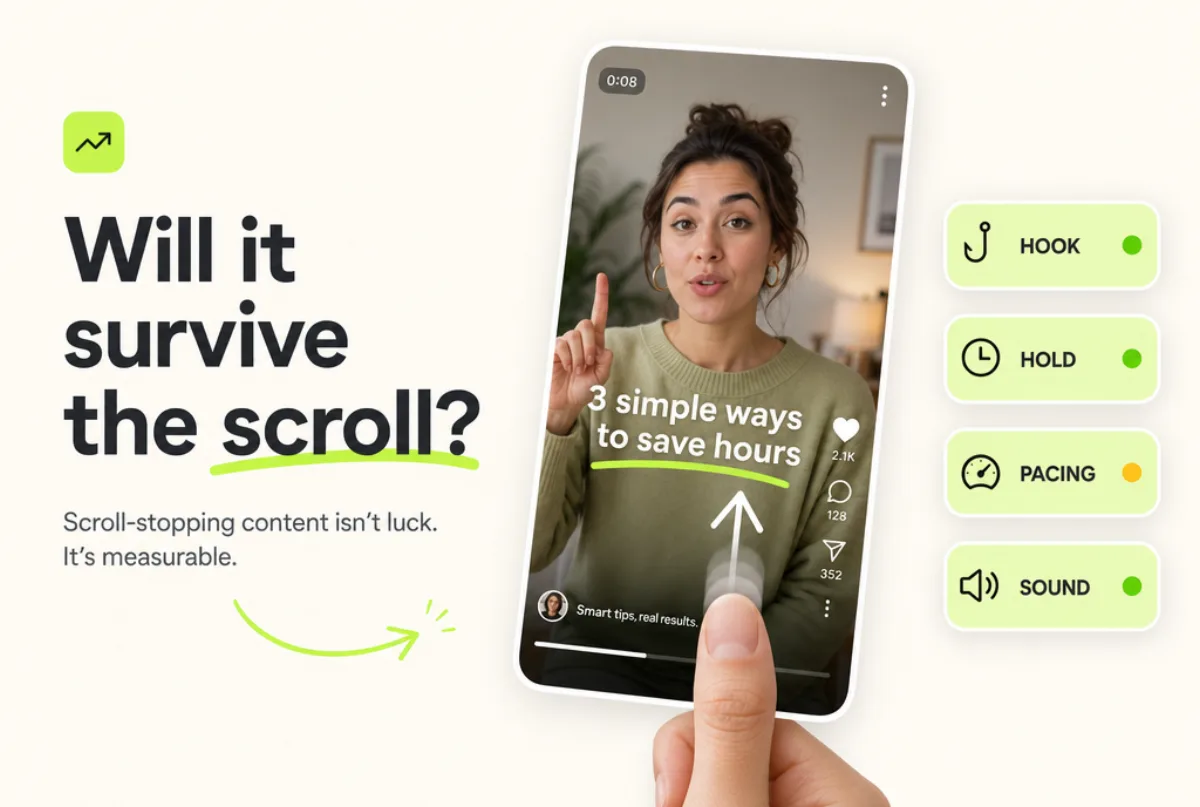
- The hook read — is there an audio onset in the opening window, or does it start into silence? An early, energetic onset is a positive signal behind Hook Strength, alongside the visual ones in how visual saliency works.
- The attention curve — a fusion of visual saliency, motion, and audio energy. When the sound goes flat, the curve dips even if the picture didn't change.
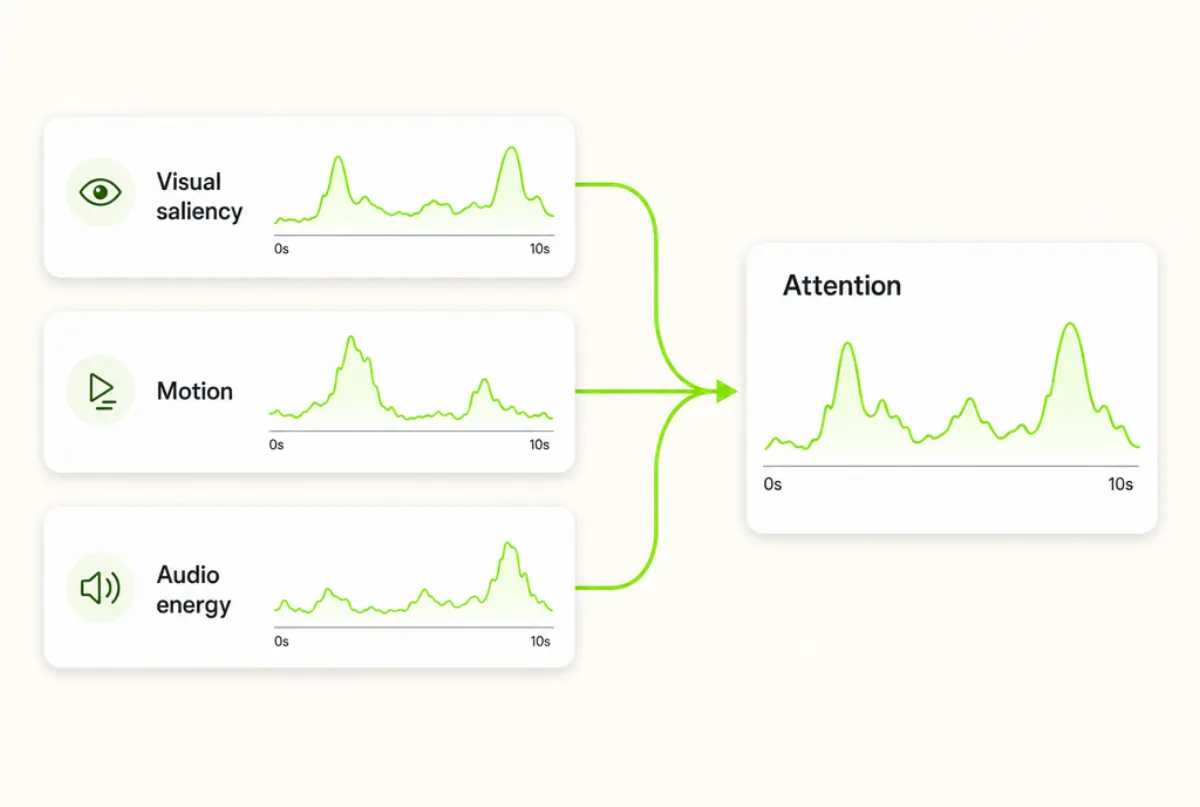 Audio energy is fused with visual saliency and motion into the attention curve — which is why a dead-air stretch can sink the line on its own.
That fusion is exactly what catches the audio-disguised-as-visual problem: the energy term drops, the line sags, you're pointed at a timestamp to inspect.
The read finds structural sound problems — a silent open, a dead-air middle, levels that never vary. It can't judge whether your track fits your audience's taste.
Treat it like the rest of a pre-publish testing workflow: a smoke detector for structural failures, not a verdict on taste.
Frequently Asked Questions
Does background music actually improve retention?
It can, but not because it makes a video "good." Music raises the energy floor so the clip never sags into dead air.
Keep the bed under the voice, cut to its beat, and let it create the contrast a deliberate quiet moment needs.
Should a short video have sound in the very first second?
Yes. The ear orients faster than the eye, so an audio onset is a second hook that can land before the visual one.
You don't need a big sound — you need a sound in the first few frames.
Why does my video feel flat even though the footage looks fine?
Because flatness is usually a sound problem. If the curve dips where the frame still looks watchable, suspect the audio: no music, no emphasis, level voice.
The fix is a bed, a level bump, or an emphasis hit — not new footage.
Does loud audio hold attention better than quiet audio?
No — contrast holds attention, not volume. A video that's loud the whole way is as flat as one that's quiet the whole way.
What works is a steady floor with deliberate departures: a swell, a hit, a drop to silence before a reveal.
Can Scrollproof tell me if my audio is the problem?
It can flag the structural problems. The read analyzes loudness, onsets, and silence second by second and surfaces silent opens, dead-air stretches, and flat energy.
What it can't judge is taste — whether the track suits your audience.
Want to see where your sound is helping or hurting? Scan one free and read the audio energy right alongside the picture.
Stop guessing. Scan the clip.
Drop a short video and get Hook Strength, Hold Rate, a second-by-second attention curve, and a real attention heatmap — in about a minute. First scans are free.