Hook vs. Hold: Two Different Jobs, Two Different Fixes
Stopping the scroll and keeping attention fail for different reasons. Learn which one is broken — and why one fix never fixes the other.
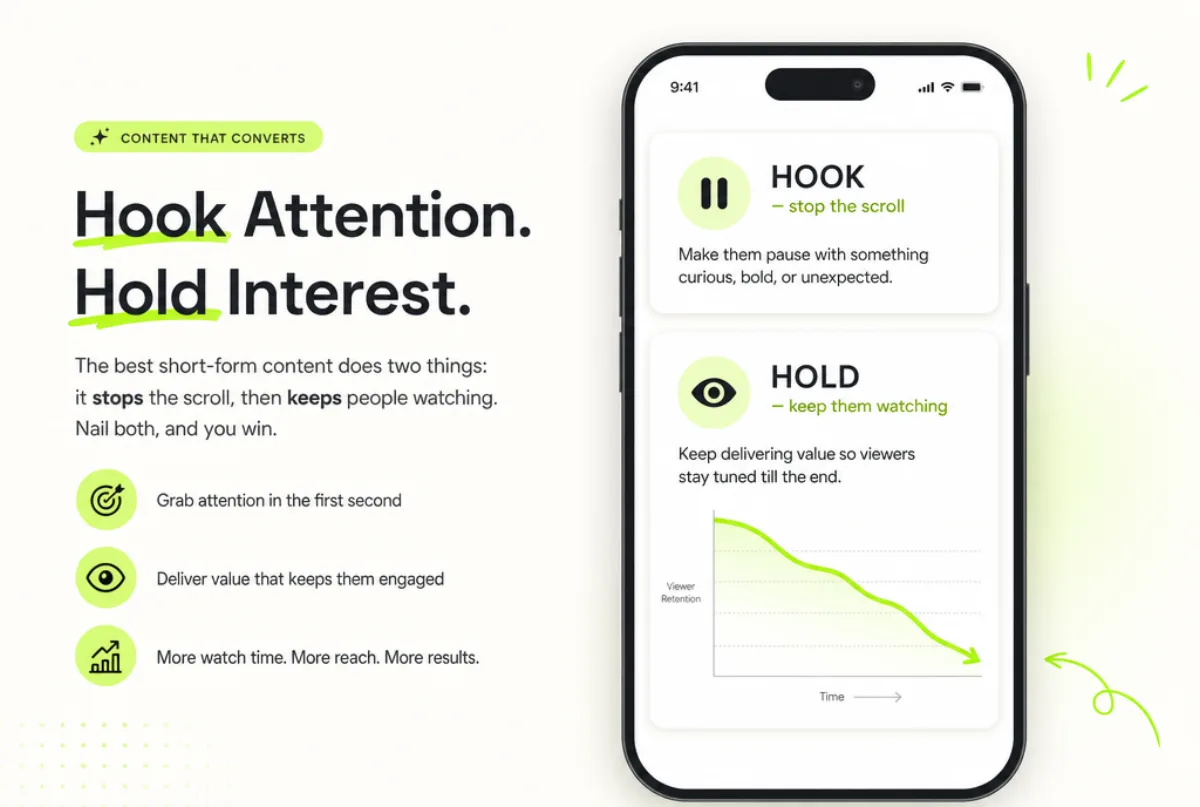
A clip has two jobs in sequence: stop the scroll, then keep the viewer. Those are the hook and the hold, and they break for completely different reasons.
TL;DR — Low retention isn't one problem. Diagnose whether the hook or the hold is failing first, then fix only the door that's actually closed.
🚪 Two jobs, two doors
The hook and the hold guard different doors. A viewer has to clear both, in order.
- The hook is the open — the first beat. Its only job: convert a scrolling viewer into a watching one. Judged in about a second, on pure instinct.
- The hold is everything after. Its job: make staying feel better than leaving, beat after beat. Judged continuously, on a slower "am I still getting something out of this?" signal.
A great hook can't save a weak hold, and a great hold can't save a weak hook. They're two distinct gates, not one funnel.
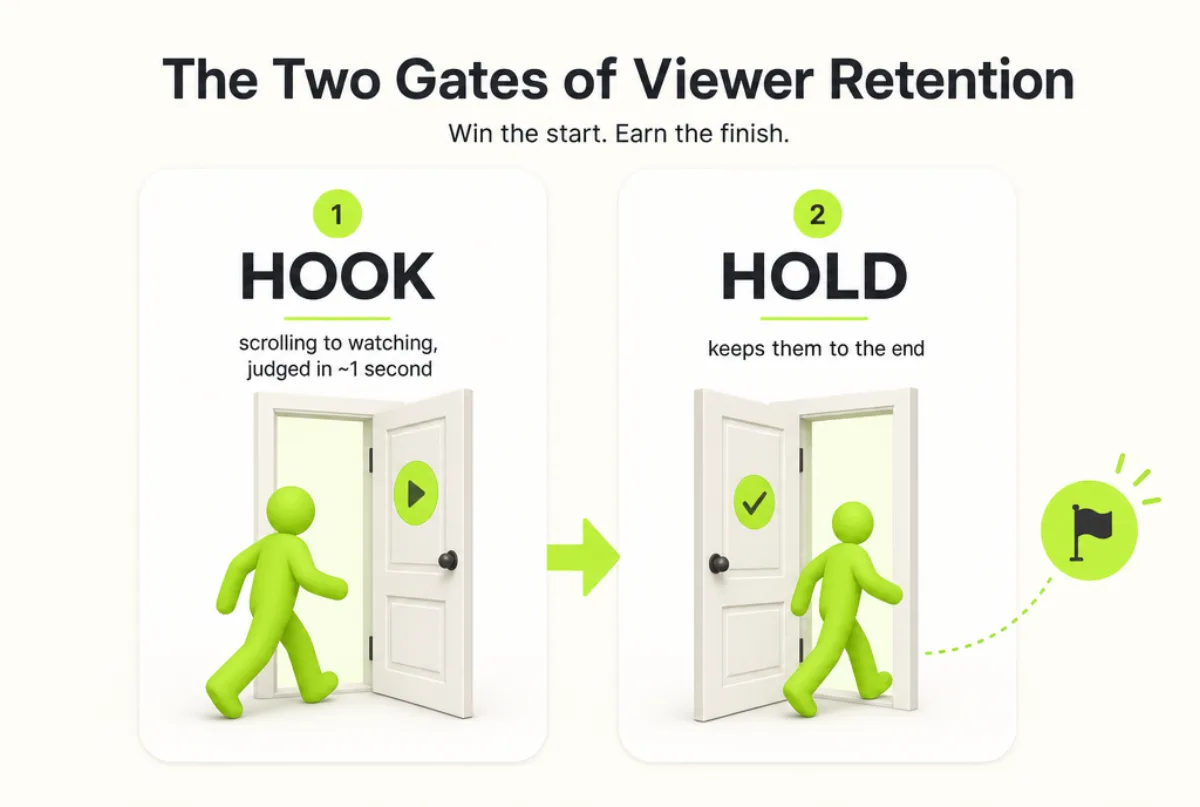 The hook and the hold guard different doors — and they are judged on different signals.
If nobody clears the first door, the quality of the second room is irrelevant. If everybody clears it into an empty room, the great door didn't help.
🎯 What the hook actually does
The hook works in a hostile environment. The viewer arrived mid-swipe, with zero context and a thumb already in motion.
They didn't choose your clip — the algorithm served it.
So the hook is an interrupt, not an introduction.
- Introductions explain what's coming. They lose the flick.
- Interrupts make leaving feel like missing something. They survive.
- "Hey guys, welcome back," slow establishing shots, brand intros — all introductions.
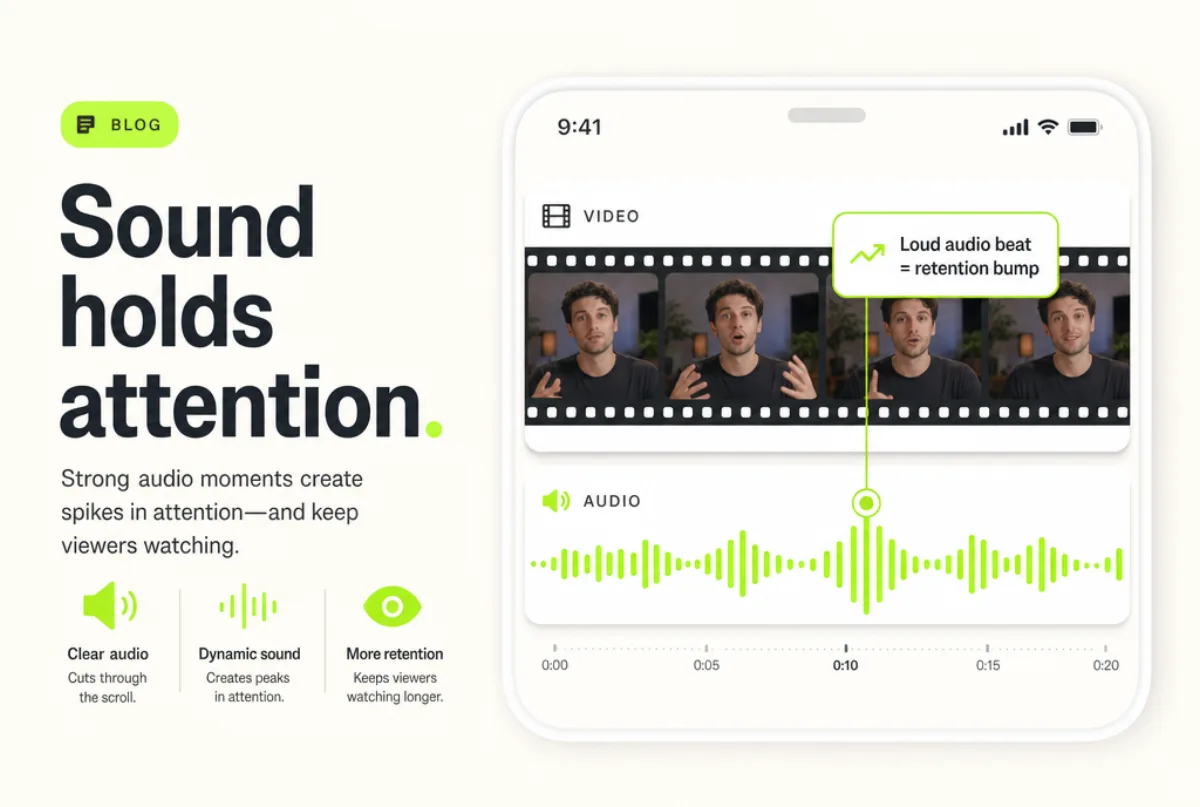
Lead with your most arresting frame, a strong audio event, or a stated stake — not your most logical setup.
Composition does the heaviest lifting here, because it's the only moment the viewer hasn't committed any time yet.
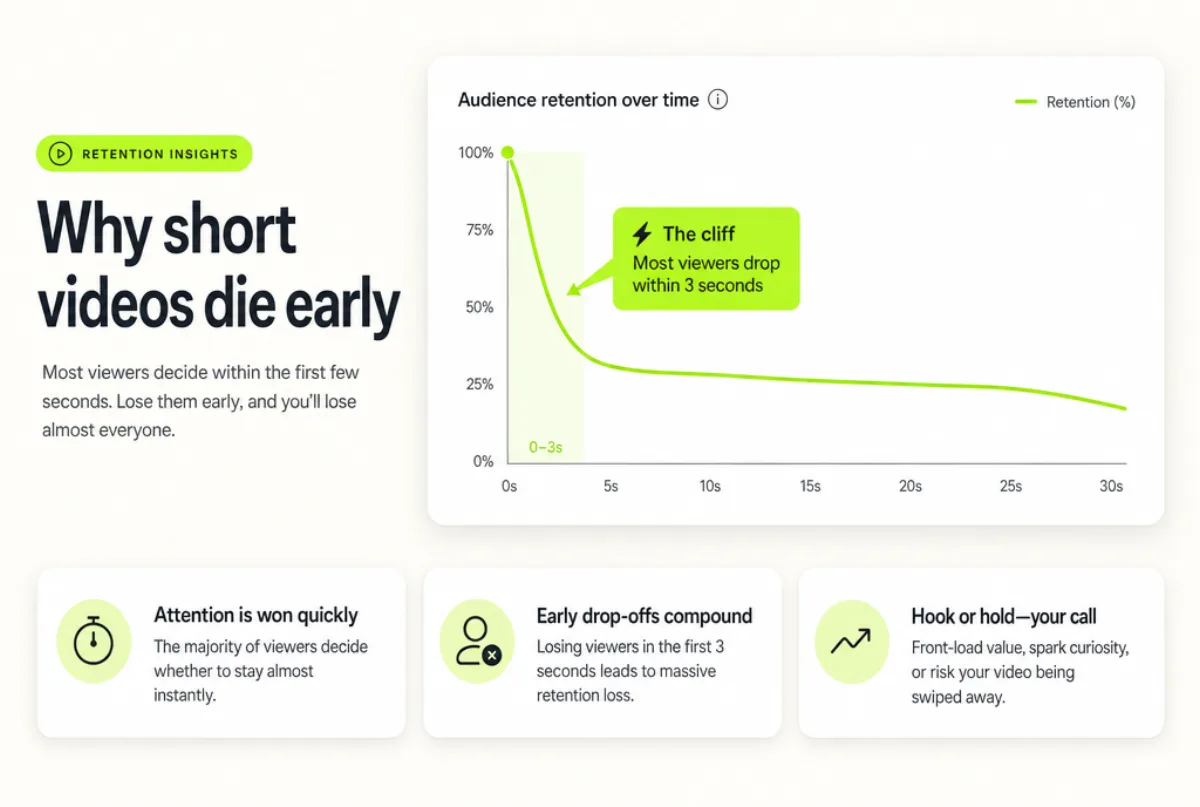
More on the open: the first second is the whole negotiation, why most short videos die before three seconds, and how the eye gets pulled by motion, contrast, and faces in how the eye decides where to look.
⏱️ What the hold actually does
If the hook is one explosion, the hold is a slow burn.
Once a viewer commits, they run a quiet background calculation: is this still worth it versus the infinite better thing one swipe away?
A strong hold keeps that calculation positive through forward motion — every beat advances the thing the viewer showed up for:
- New information
- A developing situation
- A tightening loop
- A building payoff
The moment a beat stops paying out, the calculation tips negative and they're gone.
"Interesting" isn't enough — it has to beat the near-zero cost of swiping away.
Every beat has to beat the near-zero cost of swiping away.
Measure the hold as a relative signal: average percent viewed, not raw seconds.
A 25-second clip held to second 22 is doing better than a 60-second clip held to second 35 — even though the longer one "got more watch time."
Pacing, cuts, and sound are the biggest levers.
📈 Which one is failing? Read the curve
You don't have to guess. The two failures live in different parts of the retention curve.
| Curve shape | What's failing | What the viewer felt |
|---|---|---|
| Steep cliff in first 1–2s, then stabilizes | The hook | "Not for me" — barely looked |
| Clean start, steady bleed through the middle | The hold | "I'm getting bored" — looked, then drifted |
| Sharp drop at one specific later moment | A local hold break | "Wait — it just got slow/confusing" |
A hook failure is front-loaded and brutal; a hold failure is distributed with no single villain; a local break is a sudden second cliff at one dead spot.
Learning to read these shapes is its own skill — see how to read an attention curve like a diagnostician.
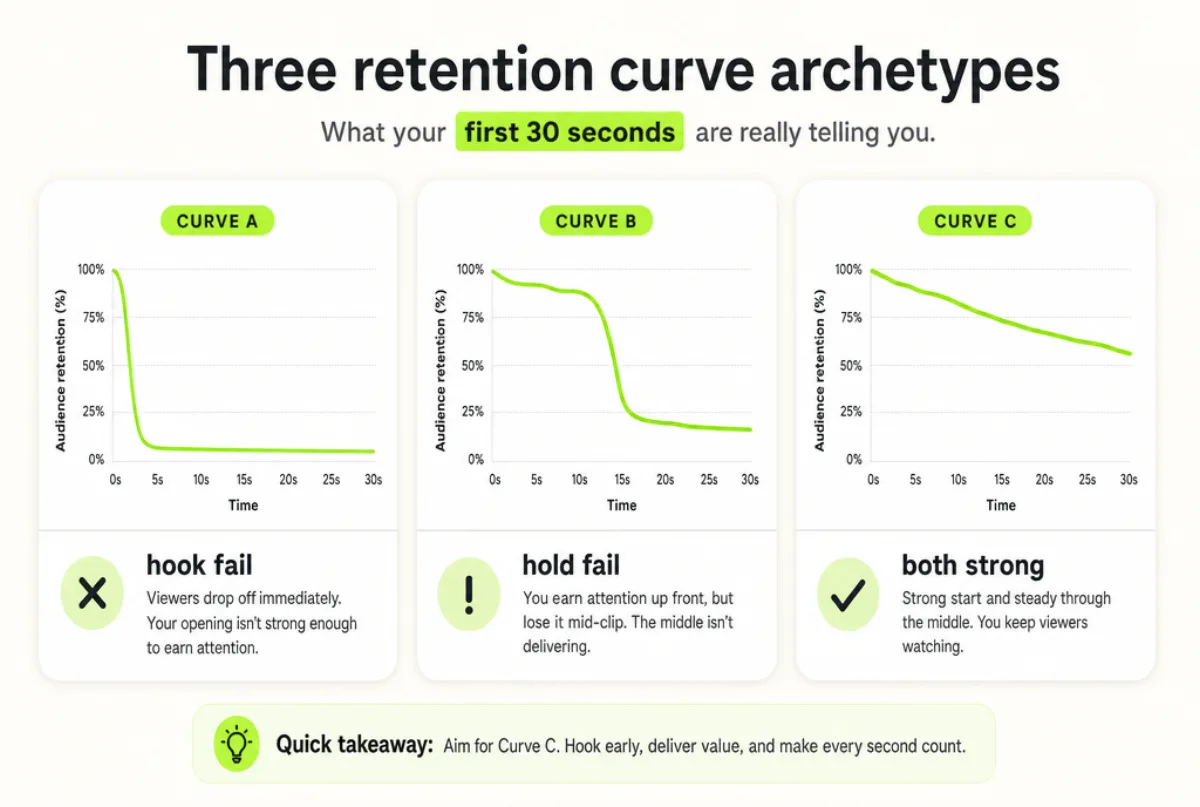 Each failure lives in a different part of the curve. The shape tells you which door is closed.
⚠️ Why the fixes don't transfer
This is the whole point.
- Fixing a hook does nothing for a hold. A sharper open just delivers more people into the same leaky middle. The cliff moves later; the bleed is unchanged. Worse: it raises expectations you then under-deliver on, which reads as a broken promise and gets punished with faster exits.
- Fixing a hold does nothing for a hook. If nobody's getting past the open, trimming the dead spot at second twelve is wasted effort. You're renovating a room no one walks into.
Fix the door that's actually closed — and leave the open one alone.
The discipline isn't doing more work. It's doing the right work.
✂️ The fixes themselves
To fix a hook, work the first beat in isolation:
- Lead with motion and your most arresting frame, not your most logical one.
- Land a clear audio event up front — a line, a beat drop, a sound that signals "something is happening."
- Cut the runway. Start where the value starts, not three seconds before.
- Show the stake instead of stating it.
There's a full playbook in fixing a weak open: a field repair guide — including turning a flat start into an interrupt without reshooting.
To fix a hold, work the spine of the video:
- Find the dead spot. There's almost always one moment where energy or information stalls. Find it on the curve, then cut or compress it.
- Maintain forward motion. Any beat that stops paying out is a candidate for deletion.
- Re-open loops. Open fresh curiosity loops before the old ones fully close. A video that resolved everything has given the viewer permission to leave.
- Vary the rhythm. Sameness is its own dead spot. A change of pace, shot, or tone resets attention.
🧠 When both are weak — or both are strong
Not every clip sits cleanly in one bucket. Two more profiles flip the right move:
- Both weak. A steep front cliff and a steady bleed usually isn't two problems — it's one upstream one: the idea isn't landing. Go back to the idea, not the timeline.
- Both strong. A clip that stops and holds is finished. The trap is the urge to keep re-cutting it. Ship it and move your effort to the next clip.
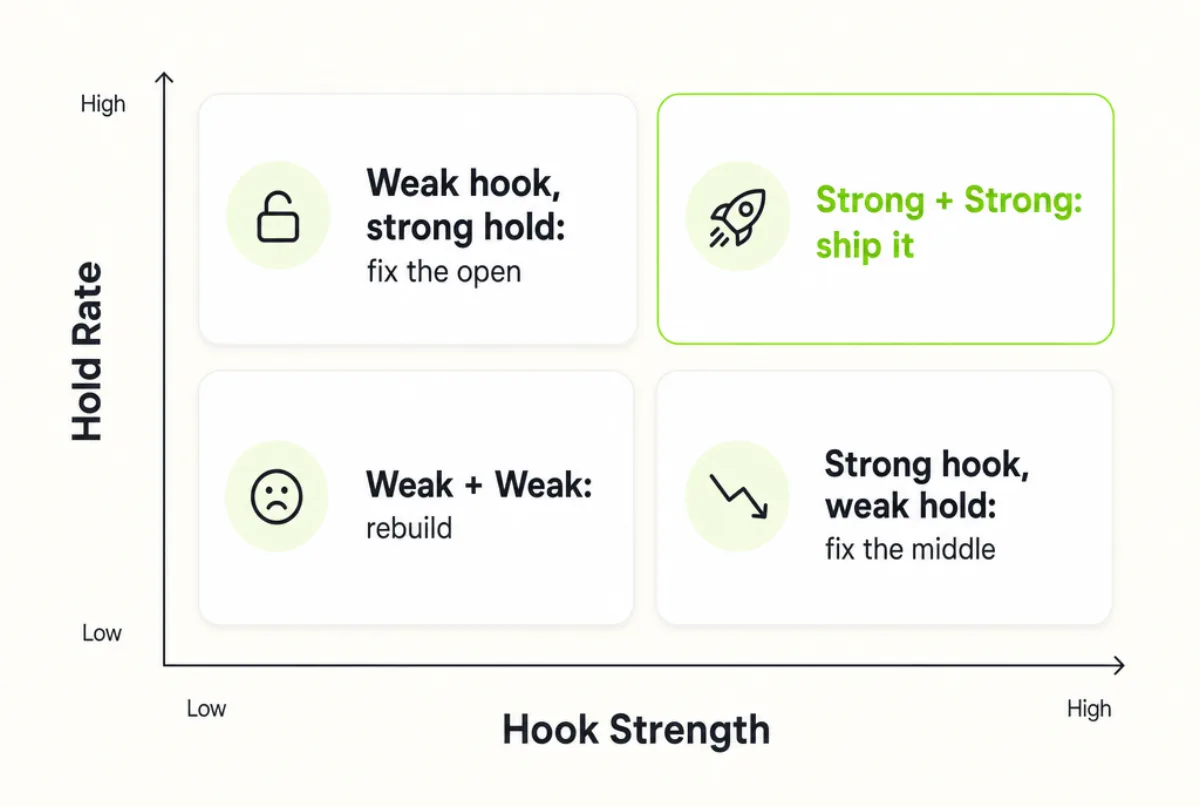 Two separate numbers, four diagnoses. The low number tells you which kind of work to do — and which to skip.
✅ Reading both numbers honestly
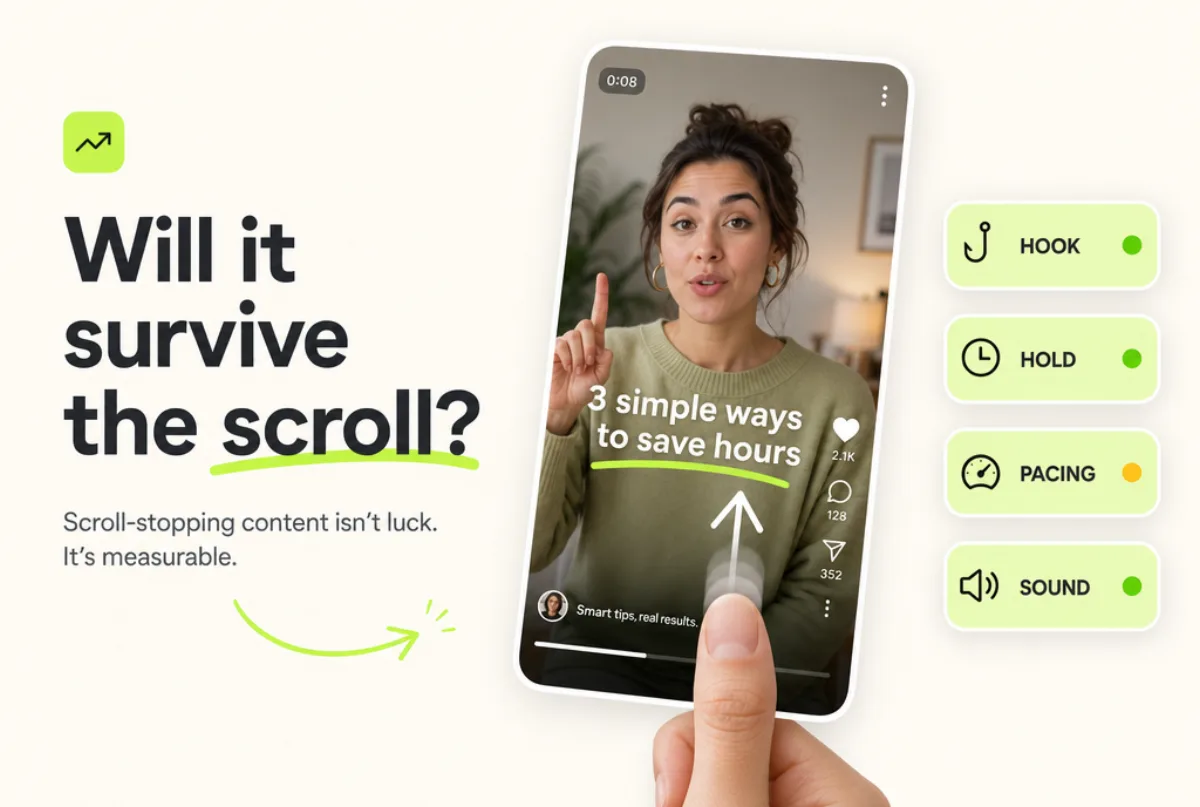
This is why Scrollproof reports Hook Strength and Hold Rate as two separate numbers, not one blended score.
A single number would hide which door is closed.
- High Hook, low Hold: great at stopping, not yet great at keeping. Work the spine.
- Strong hold, weak hook: genuinely watchable, but too few people start it. Work the open.
The honest caveat: these are predictions of creative strength, not guarantees of views. Distribution, timing, topic, and luck all sit downstream.
The point of measuring before you post is to catch the fixable thing — a flat open, a dead spot at second twelve — while it's still cheap to fix.
Fold both into a pre-publish testing workflow and "I think this one's good" becomes "I know which door is closed."
Frequently Asked Questions
What is the difference between a hook and a hold in short-form video?
The hook is the open — the first beat, whose job is to stop the scroll. The hold is everything after: keeping that viewer engaged beat by beat.
The hook is judged in about a second on instinct; the hold is judged continuously on a slower "am I still getting something out of this?" signal.
How do I know whether my hook or my hold is the problem?
Read your retention curve. A steep cliff in the first 1–2 seconds that then flattens is a hook problem.
A clean start followed by a steady decline through the middle is a hold problem. A sudden drop at one specific later moment is a local hold break — usually a dead spot like a slow transition.
Will fixing my hook improve my retention?
Only if the hook is what's failing. If your real problem is the hold, a stronger hook just delivers more people into the same leaky middle — and it can feel worse, because you raised expectations you don't meet.
Fix the door that's closed, not the one that's already open.Is hold rate the same as total watch time?
No. Hold is best read as average percent viewed, not raw seconds.
A 25-second clip watched to second 22 holds better than a 60-second clip watched to second 35, even though the longer one logged more seconds. Completion as a fraction of length is the honest measure.
Can a great hook make up for a weak hold, or vice versa?
No — they guard different doors. A great hook just stops more people and then loses them anyway, and a great hold can't help if almost nobody reaches it.
You need both to clear, which is why measuring them separately beats a single blended score.
Want to see which door is closed on your next clip? Scan one free and get a separate Hook Strength and Hold Rate before you post.
Stop guessing. Scan the clip.
Drop a short video and get Hook Strength, Hold Rate, a second-by-second attention curve, and a real attention heatmap — in about a minute. First scans are free.